Sunday, September 25, 2011

Prince Calming

Prince Calming refers to a senior faculty member at N1, who is one of my mentors here.  As his pseudonym suggests, he is a calm and quiet person, not much given to display of emotions or making authoritative statements/judgements about anything or anyone at N1.  He pretty much keeps to himself and is rarely seen at our tea shop/faculty mess - the two famous hotspots for N1 gossip.

At the same time, however, he is very well informed about institute affairs and does not shy away from expressing his opinion and taking a stand on important matters.
He does so, without making a big noise and more often than not, accomplishes his objective.  Then, he moves on to other things.

One of his most endearing qualities is that he keeps an eye out for the well being of his younger colleagues.  Many of us freely approach him if we have any questions or concerns about professional matters and receive useful and effective advice from him.  

In the last fortnight, I faced some difficult situations at N1 and was a frequent visitor to his office.  It also happened that one day, we both had to travel together to a nearby city (about two hours drive away) for some important institute work.  I learnt a lot of things while conversing with him and I am sure he won't mind if I shared some of them on this blog (although I am equally sure that he does not know about the existence of this blog.)

For starters, just a day before our trip, I had had a bit of a showdown with another colleague in PC's presence about an institute matter.  We had a difference of opinion about something and since this other colleague has a habit of continuously talking without giving others a chance, I ended up raising my voice and sharply contradicting him.  I believed then (and still do) that my point was valid, but I could have certainly put it across in a softer voice :)

During the drive to the nearby city, I asked PC how he manages to remain calm in the face of extreme provocation.  With a smile he answered, "it comes with age."
"Can you please elaborate on that," I asked, not content with his cryptic reply.  He obliged me by telling me some stories from his first few years in his faculty position, when his reaction to certain events at his former institution were similar to mine above.  However, unlike me, after some of his outbursts, he got into trouble.  I found it very difficult to relate PC's current personality to the stories he was telling me and thought, "wow, there's hope for me!"

One day, I was feeling very overwhelmed about some problems and asked PC for advice.  Instead of encouraging my ranting, however,  PC immediately pointed out that the trait that could be most harmful to one's career is negativity.  N1 is not perfect - no place is.  But, as a responsible member of this institute, if someone feels that something is amiss or needs to be corrected, one should take initiative and bring it up confidently with the concerned people/committee.  This is much more useful than gossiping about the problem.  He then gave some more examples of some issues that he had faced and how he resolved them.  "But, Dr PC, " I asked, "in your position and at your stage of career, you can bring up issues fearlessly and people will listen to you, where as, if I bring them up, I will be immediately branded a trouble maker."  

He again corrected me and said that as a member of N1 community, I have every right to raise an issue and should do so.  However, he also warned against expecting results overnight.  The gist of his advice seemed to be to take up the matter and pursue it patiently

This was a timely wake-up call to me before I drifted into complacence and negativity.

Yet another occasion on which PC gave me some useful advice was after a meeting.  I was extremely annoyed at an administrative official who, I felt, had made a disparaging and factually wrong statement about our department.  I asked PC if I should confront this person.  PC said that if I really felt so strongly about it, I should do so, but that I should wait for 24 hours before writing or talking to this person.  As it turned out, those 24 hours were enough for me to calm down and realize that (a) I had misunderstood the context in which this statement was made and (b) I was not the right person to bring this up, anyways.  Incidentally, this reminds me of my PhD supervisor, who once said that the "reply" tab in the email inbox should be renamed "reflect".

I am now out of "the blues" [even literally so as the monsoons seem to be ending] and learning to do my job, calmly and effectively, thanks to interesting experiences and mentors like PC.

I would love to hear back from readers who have learnt important socio-administrative lessons from other mentors.  From the more senior readers, of course, I would truly appreciate more advice and tips :)


Sunday, September 11, 2011

Course work: How much/little is too much/little

In the comments thread of the previous post, Hary raised an important point, namely coursework for PhD students.  Hary's perception is that PhD students at new institutes do not have enough course work before starting their research work, since faculty are too busy teaching the undergraduate courses.

Some people are of the opinion that new institutes should have started their PhD programmes after becoming well established and after their permanent campuses are fully ready and equipped.  There is much to be said for this viewpoint.
However, I feel that waiting so long before starting a doctoral program would have been detrimental to their primary objective of combining strong undergraduate teaching along with conducting research activities.  I am not sure how wise it is for any NIIX to restrict its research activities to undergraduate theses and summer research programs for the next 5 to 10 years.  NIIXs are also hiring people who are expected to do research and for many of these people, having students is essential for progress in their research programs.  So, having a well structured PhD program is one of the top priorities of these institutes.  The training of their first few students and what these students do with their PhDs will go a long way in determining the future of these institutes.

Course work, we all agree, is an important component of a PhD programme.
However, not all agree about how much course work a student needs before embarking on research.  For example, the course work that my departmental colleagues and I did as PhD students was more intensive than what PhD students in our department at N1 do. However, whenever my colleagues and I raise the issue of increasing the course requirements for our students, colleagues at other departments disagree with us because they feel that their students do not need as much course work.  So, at the moment, we have balanced all view points by asking students to do some minimal number of foundational courses, upon which all departments agree.  I don't think that determining the course requirements has anything to do with a shortage of faculty: the departments who insist most on less mandatory course work are in fact the departments which have a very high number of faculty members.

After this requirement is fulfilled, the student's advisor will direct the student to sit in for more courses which the advisor considers important for the student.  The student can also voluntarily attend classes that he or she is interested in.  For example, next semester, I will be teaching a course for final year undergrads at N1.
I have asked my PhD student to take this course because he cannot possibly start working on his thesis problem before taking this course.  He will take this course not just informally, but also do all the work required from those who credit this course, that is, do the assignments and write the exams.  Since he is a little senior to the other students in the course, the expectations from him will also be higher.
Likewise, he will be encouraged to take more courses in the future if they are relevant to his training.

For some part of this semester, he is visiting an older institute, which is running a special program in my area of research.  He will be attending some lectures given by an expert on a topic which is very important for his future project.  So, to answer Hary's question, like me, many supervisors encourage their students to spend time in Ox type institutes and do some course work, although there is no formal exchange programme.  Many of us are aware of the exposure that our students need and encourage students to make good use of opportunities available outside N1.  At the same time, however, we also don't want students to lose their focus on their research project by traveling too much, at least in the initial stages of their training.

Another resource which I hope we can utilize is our recent connection to the National Knowledge Network, which now gives us access to very high speed internet.  This month,  a senior professor in North America will be giving a series of lectures on a weekly basis which both my student and I will attend.  All that we need is to connect via gmail webchat and have the professor's webcam facing the board on which he will write (or the screen on which he will project his slides).  This way, if Mohammed cannot go to the mountain, the mountain can come to Mohammad.

With more technology, of course, one can have virtual classrooms on a larger scale in which we get instructors from all over India and the world.  This could be one more way of giving more exposure to students who would like to attend more seminars or lectures and interact with research groups in other institutes.

I would like to ask readers the following questions:

If you are a supervisor, how much course work would you like your student to do before s/he starts working on the thesis topic? Do you encourage your student to attend more courses in the later stages of his/her training or would you prefer that the student focus entirely on their research project?

If you are a student, how much importance do you give to course work as part of your PhD training?  Do you consider the course requirements at your institute or university as too much or too little or just right?


Sunday, September 4, 2011

Naysayers

A few days ago, a colleague C invited a senior collaborator to visit N1 for a few days to discuss their research project.  C had hoped that since the collaborator is a well known and senior researcher in their field, his presence would have a positive effect on their department and that the senior visitor would give them some input about department activities like their graduate program, which is being built from scratch.

The senior researcher, let's call him SR, agreed to visit N1 for two days.  However, his visit totally belied C's expectations.  All that SR had to offer was criticism and disdain.  Some of his comments, at their best, could be interpreted as impatience with the newness of N1 and at their worst, as showing no faith in the future of N1.
After SR left, C was depressed for some time and doubted his decision to join N1.
But, he got over it soon and decided not to take SR's comments too seriously.

Perhaps, SR meant to offer constructive criticism, but it just came out the wrong way.  Perhaps, this was SR's way of showing concern for C, for whom he wanted the very best.  Or perhaps, SR is a jerk with an inflated opinion of himself, who could not appreciate the hospitality of a department which had invited him with a lot of goodwill.  I do not know him well enough to decide.

SR is not unique in writing off N1 and I have met others with similar views about N1-type institutes.  If I am in a good mood, I think, "Oh well.  These people have got used to working in a certain environment and cannot imagine that people can adjust to and stay happy in environments different from theirs." If I am in a bad mood,  I deplore their prejudice and lack of vision.[1]

Nonetheless, what concerns me is that by making disparaging comments, scientists like SR are possibly discouraging their PhD students and postdocs from applying to new institutes.  This is not good for my department (and similar departments in other new institutes), who are trying very hard to hire and retain good people.  This is also not good for those students and postdocs, who might only apply to limited institutes and restrict their options.

Perhaps, this is not as serious as I have made it out to be.  I welcome feedback from readers.

For those of you who are planning to enter the job market or who already have a job(anywhere in the world), how important is/has been your supervisor/mentor's opinion about your potential employer to you?[2]

For my senior readers, did you or would you discourage your PhD student or postdoc from applying to a new institute?

If my PhD student ever approaches me for advice about choosing a job, I would say something along the lines of a comment made by Vijay, while answering a question raised in a previous post:

"Today, I would focus on joining a research institution or university, young or old, that is fun to be in and wants me. The two criteria, fun to be and one which wants you, appear simple but are not. If you manage such a place, you have it made and the equipment will take care of itself."


[1] I do so mentally, of course - I cannot imagine the consequences if I were to say that aloud.  
[2] I consulted my PhD advisor before taking my final decision.  I think I would have made this choice even if he did not have a great opinion of N1.  However, his positive views were certainly very encouraging and meant a lot to me.

Wednesday, August 31, 2011

The office story

The temporary campus of N1 has very limited office space and we all have to share offices.  As a postdoc, I had always dreamt vividly of the day when I would be an independent faculty member and have my own office.  My second dream still remains a dream, but the joy at the realization of the first dream far exceeds the disappointment about not realizing the second.

I share an office with a really nice and easy-going office mate[1], let's call him OM.
We have co-ordinated our activities in such a way that we do not drive each other up the wall.

Firstly, while I am a morning person, OM is a night bird.  Therefore, my most serious research-related work gets done in the morning before OM arrives or while he is away teaching.  Similarly, his research work gets done in the evening or at night after I leave.

The timing that overlaps is late morning and afternoon, when we do teaching related work and/or have office hours for our students.  I am a little sensitive to noise, but OM manages to hold discussions with his students in a not-too-loud voice, and mostly over his desk.  By contrast, I like to discuss things with my students on the blackboard.  Moreover, since I have spent long years teaching really big classes in North America, despite my best efforts, my voice does get a little loud at times!  Therefore, my style of teaching is more disruptive.  It is rather convenient that OM is not bothered by noise (or at least does not complain about it).  Our office hours for students also do not coincide and therefore we have managed not to suffocate ourselves by an inflow of too many students at the same time.  As it happens, our office does not receive good cell-phone signal.  If either of us receives or makes a call, he or she is forced to go out of the office.  So, there is no disturbance on this account.

We also have an unwritten understanding that whatever we say to each other about N1 does not go out of the office.  Therefore, we often share our concerns and frustrations about troublesome matters.  He is one of the very few people here with whom I can converse freely without worrying about the consequences.

To cut a long story short, if one cannot have one's own office, having an office mate like OM is decidedly the next best option[2,3].

Recently, our office-sharing fairy tale almost came to an end, when the powers in charge of office space decided to shift OM out of our office to make way for a new female colleague (NFC), who joined us this semester.  It was perceived by the well-meaning authorities that two women would be more comfortable in the same office than a man and a woman.  (Is this policy common in other institutes in India?)

OM accepted this new turn of affairs with a stoic silence.  I believe in the fundamental premise that any resources that N1 is providing to us right now should be considered a luxury and not a right.  So, I did not want to complain about this new arrangement[4].  But one day, at the conclusion of a very pleasant and successful meeting, I took some risk and approached the senior person responsible for office allocation and requested him to let OM continue in the office.  To my relief, he happily agreed and mentioned that he was only acting on the assumption that I would prefer to share an office with a female colleague.  I thanked him for his concern and assured him that the previous arrangement with OM worked well for both of us.  So, OM and I continue to be office mates.

There's a small twist to our story.

NFC has been allocated office space in a different building which is currently under renovation.  This building is not yet ready and while she waits for her real office to be ready, an extra desk and chair has been arranged for her in our office.  NFC went through a short-lived trauma of her dream of her own office not materializing, but has adjusted well to the status quo.  For now, we three seem to be doing very well with each other, although, we sure hope that the status quo does not last too long.


[1] He reminds me of the happy-go-lucky Dev Anand in this song in Nau Do Gyarah
[2] To me,  sharing a spacious office with windows is much better than having a cubicle to oneself.
[3] Of course, we do have some points of conflict.  While OM prefers to open windows and let in fresh air, I am more of an AC person! I also like to set the temperature at 26 C, which he finds too cold!
[4] I was also afraid of being branded a trouble maker.

Saturday, August 27, 2011

Winter school - conclusion

Our winter school was very successful.  Dr Rock-Star, the primary speaker, was absolutely delighted to see a large number of enthusiastic students for his lectures.
The topic on which he was lecturing is a very important topic in my field, and the available literature on this subject follows a certain approach.  However, he chose to convey the subject matter using a very different approach, which is elegant and more easily comprehensible to students.  He had not previously communicated much to me about his lectures and I realized on the first day that the problem sets that had been previously prepared (following the traditional approach) for tutorials would not match his lectures.  So, every morning before his lectures, Dr R-S and I would sit together and prepare new problem sets.  I have to admit- he was the brain behind the problems while I mostly typed them out and solved them.  I think I enjoyed this part of the winter school the most.  This new approach to the topic has also generated some interesting research problems and has been a valuable addition to my research programme.
The tutors played a very important role in the whole school.  They have not had any previous experience in teaching and took on this responsibility with a very positive attitude.  The material presented in the lectures was also very new to them.  They would take the problem sets from me just after Dr R-S's lecture everyday, work on them during the lunch hour and tutor the students in the afternoon.  According to the feedback forms that we later received,  the students highly appreciated the effort put in by these tutors.  I wish them a successful academic career ahead!
Our participants, as I mentioned before, were a healthy mix of students from IIX institutes as well as colleges and universities.  From the feedback received from them, it seems that most IIX students saw this winter school as yet another opportunity to do something exciting in the winter vacation.  Many of them applied to it because they were encouraged by the faculty at their institutes who were aware of Dr R-S's contribution to this field.  On the other hand, most of our university student participants had not heard of Dr R-S before and their primary motivation in applying was simply to experience the scientific atmosphere at a research institute.  The students unanimously felt that they got much more out of the lectures than they had anticipated.  This is possibly because instead of just attending lectures, they worked out the material in the lectures by themselves in the tutorials.  Another interesting feedback we received was that university students found faculty at N1 much more friendly and easy-going than those at their universities.  They probably would have had the same impression at most IIX and research institutes.
Dr R-S's visit and the winter school has been a great boost to our baby department.
Many students from N1, who attended these lectures, have now decided to major in my STEM field.  Even those students who have not done so have benefited from these lectures and have now become regular visitors to our department seminar.
Dr R-S enjoyed the visit very much and will be visiting us again in the coming winter.
Last, but not the least, my colleague from the last post, has now overcome his health problems.  Although his primary research interests are different from mine or Dr R-S's, he attended the lectures and enjoyed them.  He is very excited about the positive impact of such visits to N1 by senior scientists and we are both planning more workshops/winter schools in the coming years with external funding.  I hope that more colleagues will catch on to the spirit and join our efforts to make our department at N1 active and vibrant.


Sunday, August 21, 2011

Mission winter school

Before continuing with the winter school story from my last post, I quickly went over it.  The frequent use of the pronoun "I" instead of "we" irked me and possibly irked the other readers as well.  Let me clarify - I am not a megalomaniac.  Nor do I lack in team spirit.  There were three of us who initially planned the lecture series.
However, by the time the plan was put into motion, one of my colleagues was battling a serious health problem while the other colleague was dealing with some personal issues which significantly engaged the colleague's mind and energy.
Moreover, since Dr Rock Star has been my academic mentor, it meant a lot to me that his visit should be a success and that he should return with a good impression of N1.  So, I ended up planning the event myself (although with a lot of help from the admin staff).  Hence the use of "I" more than "we".
Nonetheless, I do acknowledge that I have a serious problem in asking for help.  I tend to take on more responsibilities than can be handled comfortably[1].  Recently, I made some serious mistakes because of this tendency to bite off more than I can chew and have learnt, since then, to ask my colleagues frankly for help and also to say no to something I am unable to do(though I must admit, I say it rather tactlessly and sometimes to the wrong people, but more about that later).
Coming back to the topic at hand, the whole event was shaping up very differently from what had been initially anticipated.  Ideally, workshops/instructional schools should be planned and announced at least 4 to 5 months before the event so that by the time the participants are invited, they have enough time to book their tickets.
However, in this case, the announcement was sent out only about two months before and it was exactly a month before the event week that the "selected" participant list was ready [2].  At this time, a tragedy occurred - due to an unexpected server problem, some of us lost all the emails in our N1 email account.
I was among these unfortunate few [3].  Not being a very computer savvy person, I had not created a back-up and therefore, lost all the contact information of the selected participants [4](their email addresses had been clubbed together in my address book, which I also lost).  However, since I was "personally invested" in this mission and 25 is not such a big number, I remembered the names of all the participants and which institutes/universities they were from.  It was easy to retrieve the email addresses of students coming from research and IIX institutes.  Not so for university students.  Fortunately, I remembered the writers of their reference letters and it was easy to contact them and ask them to send me the email addresses of these students.  So, this crisis was somehow averted and important lessons were learnt regarding data management as falling back on memory is not always a viable option.
All invited students, except one, confirmed their attendance.  Around this time, I announced Dr R-S's visit to students at N1 again and about 25 students expressed an interest in attending these lectures.  So, we now had a nice audience of about 50 students ready for the lectures, with four of them being PhD students, willing and able to run tutorials.  So, it seemed more appropriate (and also more fashionable) to call this a winter school.  The budget was approved, all required rooms in guest house and hostels were reserved, the registration packages for participants were ready and a bus was arranged to bring students from the train station at scheduled hours.  A big lecture hall was also booked.
Around a week before the arrival of the speaker, I started receiving emails from more students at N1, who wanted to attend the winter school.  Since the lecture hall can accommodate a very big number of students, there was no problem in them attending the lectures.  However, it was too late to register them for the winter school and therefore, we could not give them the registration package (which included meal coupons).
In the 48 hours preceding the first day of our winter school, a few strange and unexpected things happened.  An undergraduate student from an IIX institute, who had not applied before, wrote to me out of the blue that he would be attending the event and that he had already booked his train tickets for N1 city.  I was highly irritated, but could not do much because by the time I received the email, he would have already boarded the train to N1 city.  I did not have the heart to refuse him hostel accommodation on his arrival, but I did have a talk with him about winter school application etiquette.   I would like to hear back from readers what they would have done in such a situation.
I also got a panic call from four female students coming from a college in Delhi.
These students had made their booking together through a travel agent, who booked their train for a wrong date.  They realized this only on reaching the station and by then, it was too late for them to book another train.  So, they had no option available except to come by flight the next morning.  This was not such a big problem for me - the shuttle bus driver was instructed not to wait for them at the train station and pick up arrangements were made from the airport.  However, on the day of their flight, they called up again to inform me that this flight had got canceled and that the only flight available was a late night flight.  Due to a shortage of institute vehicles, at such short notice, I had no option but to hire a vehicle(Tata Sumo) from a private operator known to me. The father of one of the women spoke to me and said that he had apprehensions about the girls arriving at N1 city at such a late hour and being received by a private taxi driver.  I sympathized with his concerns, but was at my wits end.  At that time, I remembered that most students at N1 are usually up till very late at night.  I called up two second year students, who had volunteered to help me with organizing the event, and asked them if they could accompany the Sumo driver and receive the girls.  These two boys, of course, jumped at the opportunity.  The father was now sufficiently reassured.  Needless to say, the girls arrived very late, but safely and comfortably at N1.
All students had now arrived on campus and we were ready to begin.
Okay, so the post has again turned out to be much bigger than I thought.  What's more, I am visiting my family this weekend and my disciplinarian father is mortified that I am blogging so late at night.  I will continue the story in my next post.


[1] As a child, I once asked my teacher to make me a class "monitor".  But, once she did so, I found myself unable to do even simple things like opening a Godrej almirah, in which we stored our books etc. 
[2] Some students, who could have really benefited from these lectures, applied after the deadline.  Sadly, I was unable to invite these students because we had already reached the numbers approved by the administration.
[3] All our lost data was indeed retrieved later, but by then the winter school was over.
[4] I had put together all their email addresses in my address book the previous evening, with the intention to send out the invitation the following morning. The server problem happened overnight.  In my (misplaced and ill-timed) effort to save paper, I also did not print out the applications of students, but kept track of them online. 

Monday, August 15, 2011

How an informal lecture series became a winter school

Happy independence day to all Indian readers!
Today, I would like to write about an activity at N1 last year that I thoroughly enjoyed organizing.
After I joined, some colleagues and I felt that it would be a good idea to invite a distinguished scientist in our field to visit us for a week in the winter and deliver some lectures that would be accessible to students.  This was a vague idea, but no one had any concrete suggestions.  Apart from the above qualities, we needed a speaker who would be willing to spend a week at a new institute like N1 at a time when almost all institutes in India organize their conferences/workshops etc.
One of my academic mentors, let's call him Dr Rock Star, maintains very close ties with India and frequently visits different research institutes here.  He has done some really good work in my field and also happens to be an excellent teacher.  He was one of the people who offered me a lot of encouragement when I decided to join N1 and had even expressed a willingness to visit me some time.  So, he seemed to to be the "ideal" candidate for our mini- lecture series.  Our director immediately approved the lecture series.  I wrote to Dr Rock Star, who happily accepted our invitation.  However, as his schedule is usually very packed, we did not have a lot of flexibility in coming up with dates.  He simply gave us a block of five days in which he was not scheduled for any other event and we had to plan our lecture series within those days.
The immediate challenge was that the last three of those five days were coinciding with an international conference at N1 that had been planned months in advance.  I also came to know that there was another symposium coinciding with the first two days of our proposed lecture series.  This symposium had been announced before I joined N1 and I was not made aware of it until after Dr Rock Star confirmed his dates.  Given the space and resource constraints at N1, I found myself in an uncomfortable situation.  I felt that I was trying to bull-doze my way through events which had been carefully planned months in advance.
Fortunately, the organizers of both the conference as well as the symposium had no such qualms and fully co-operated with me. We sat together and figured out the room allocations for all visitors of the three events and luckily, our guest house had just the right number of rooms available to house all faculty participants of the three events as per their dates.
The second challenge (or so I thought) was to get student participants for our lecture series.  At first, my plan was to have the lectures only for students at N1.
Sadly, students from my own department were very few in number and did not show much enthusiasm for Dr Rock Star's lectures.  I was scared that he might just end up lecturing to empty class rooms!
I remember bringing up this issue during a departmental meeting, in which the director was also present. I asked him if I could invite about 20 students from outside N1 to attend the event.  He approved this suggestion along with the reimbursement of travel expenses of out-station participants and asked me to get in touch with the accounts section to work out the detailed budget.
That evening, I sent out emails to my colleagues at other institutes in India, announcing Dr R-S's visit and lectures and requested them to forward this information to students from their institutes and universities in their cities/towns who would be interested in these lectures.  I thought that within a few weeks, I might hear from around 20 students who would like to attend these lectures.  I was in for a big surprise! By the next afternoon, I had received about a hundred emails from interested students.  To my amusement, some of the emails were from lecturers in certain colleges who wanted to bring their whole class along for these lectures.[1]
Over the week, I received many more applications.  It was clear that I would have to follow some sort of selection procedure to short-list  genuine participants.   So, I wrote back to all these students asking them to submit, by a certain date, a statement of interest explaining why they were interested in these lectures along with a reference letter from someone who could comment on their academic performance.  This automatically narrowed down the applicant pool.
Apparently, college lecturers who previously wanted to bring their whole class with them did not show any willingness in guiding their students on how to write a statement!
By the deadline, I received about 30 "complete" applications from students from various universities and IIX institutes.  These were mostly undergraduate students, but some of them were in Master's programs.  Some of these applications had to be rejected because these students, applying from the same department, had just cut-copy-pasted the same statement!  Other than these, I invited all other students.
They were about 25 in number, including 4 PhD students.
Meanwhile, I announced Dr R-S's visit again to our students at N1.  This time around, I received a much more positive response.  25 students expressed interest in attending these lectures.  Apparently, when I had sent the previous announcement, many of them had not received it due to a server problem and hence the poor response!
So, there would be 50 student participants attending these lectures.  It was much more appropriate to call it a winter school now.  The 4 PhD students were asked if they would be willing to run tutorial sessions after lectures on each day of the school- they agreed.
At around this time, I went to the accounts office.  After all the horror stories I had heard about accounts sections in government institutes, I was very nervous about dealing with them.  But, they turned out to be  very helpful and friendly.  I had no experience in preparing any kind of budget before and had no idea how to contact caterers, transport providers etc- the accounts office did all this work.  They also pointed out how much expense one would incur on many other contingencies that I had not thought about. [2] One evening, after some discussion, around 5 pm,  our budget was ready. We sent it to the director and by 6 pm, we got a one-word reply from him, "approved".

This has turned out to be a much larger post than I imagined (just like the winter school).  In my next post, I will write about my experience in running the winter school, which is when the real challenges showed up.


[1] The other amusing outcome was that Dr Rock Star started receiving invitations from several colleges in India, from which he had never heard before, inviting him to visit them during his forthcoming visit to India!
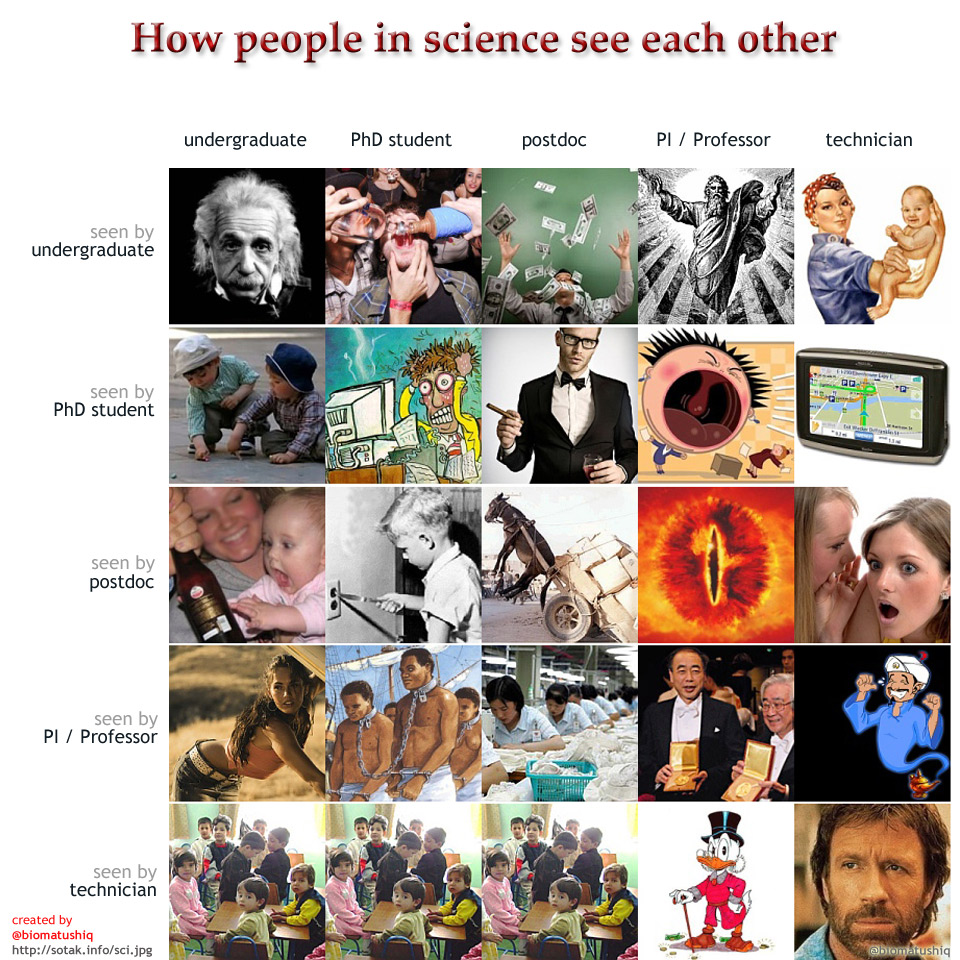
[2] I sometimes feel that it is probably much harder for accounts people to deal with faculty members than for us to deal with them.  If they are not dealing with people like me who dare to organize big events without knowing the basics of writing up a budget, they are dealing with others who try to teach them how to do their jobs! Abi@nanopolitan, in this post has a link to a really nice picture about how people in science see each other.  One could easily replace the technician with the accounts section staff.