Showing posts with label Conferences/Workshops. Show all posts

Sunday, December 29, 2024

On conference talks and editorial duties

"Explain 2024 for you in one word,"  demands my social media timeline.  Conciseness is not my strongest quality.  So, I am going to sum up two years, 2023 and 2024 in two words: talks and reviews. 

(Conference) talks: In early 2023, I was invited to deliver a mini-course in a number theory workshop at NISER, Bhubaneswar.  I chose one of my favourite themes, central limit theorems in number theory, and prepared the lecture notes and slides with great enthusiasm.  Underneath the enthusiasm was a pressing need to present as much material about this topic in as short a time as possible.  "How do I present all the important theorems in this field along with all the proofs so that every minute counts for the participants?"  Further underneath, of course, was the "real" desire to present all MY results on this topic.  After the first lecture, I was taken aback when my host gently pointed out that I was going too fast. I slowed down in the second lecture, but received the same feedback. So, for the remaining lectures, I did the sensible thing of slashing down the content to less than half, and focusing on a few essential principles with applications. These lectures saw a far higher engagement from the audience. After giving up the self-imposed pressure to present everything I know about the topic, I felt relaxed. 

That evening, I walked back to the guest house with Professor Michel Waldschmidt, a distinguished number theorist who delivers excellent lectures, and is possibly one of the friendliest people on this planet. I confessed a form of impostor syndrome: an innate fear of being judged for not knowing enough if I don't present everything I want to. This was pushing me to present more than what a handful of hours could reasonably contain. I received valuable advice from him, which helped change my attitude.  

Through 2023 and 2024, I have put in some thought and practice into pitching my talks at the right level, keeping the content substantive but pleasant, and ensuring that I do not exceed my time slot in any lecture.  This requires better self-organization than I have practiced before. My most recent talk was at a number theory conference in Chennai two weeks ago. I wanted to talk about the project that I have spent the last few months working on. There was a real danger of devolving into technicalities. Without any fear of judgment, this time, I spent the first 25 minutes talking about the application of a classical technique to the most basic L-function, namely the zeta function, as the best features of the technique can be demonstrated here. I used the last 5 minutes to discuss how the idea can be adapted to the functions of my interest, namely the modular L-functions, and the technicalities that emerge in this application. (Here is the link to the talk, in case anyone is interested; it starts at 1:18:52). In a most pleasant turn of events, Professor Waldschmidt was in the audience and gave me warm and encouraging feedback for my talk this time. I reminded him of our conversation two years ago, and he was thrilled to know that his advice had been helpful.

A thought to ponder upon: many mathematicians prefer to deliver talks on the board. This requires planning and careful thought: you cannot write on a board in 30-40 minutes what you can show on slides. Can you convey your work effectively without all the equations neatly lined up on your slides for ready reference? The impact of a properly organized board talk is miraculous. In some of the best talks that I've attended, the speakers manage to make it look effortless, and it can affect the audience as deeply as a well-practiced musical composition. For the year 2025, I plan to experiment with this form, and get some practice in concision.

(Review/referee duties): The other academic duty in which I have found myself spending a considerable amount of time is writing referee reports for journal articles. I am not sure I have the most efficient system to fulfill this duty, but over the years, I have been getting better at it. This is a job we do (and others do for us) purely as an academic service. It takes a sizeable amount of time; and in Mathematics, you simply have to sit down and verify all the steps and details, which can take longer than planned. A large part of our duties as postgraduate advisors is similar: we proofread articles and theses written by our own students or mentees and check all details before they submit their work. 

Sometimes, people outside our immediate academic circles send us their work with a request for feedback; this often reminds me of early faculty days when I started writing to some senior mathematicians for feedback on preprints. Some had never had any prior interaction with me. Almost always, they wrote back and shared extremely helpful inputs. There were also occasions when anonymous referees gave thorough inputs for my submissions, much beyond the "call of duty", so to speak. These inputs and comments not only improved the quality of the article, but also helped shape new ideas for future research. 

How do people manage their own thriving research programmes and also take time out to write in detail to people seeking feedback, I wondered. While a desire to help is perhaps at the root of their response, they must have very good personal work habits (and sturdy systems) to be able to do this effectively. Does this develop with practice and experience? Do we develop good systems in response to a strong sense of purpose to serve the academic community, or does one develop a strong sense of purpose by performing such duties, beginning perhaps in small measure, and increasing our capacity with time?

A brilliant example that comes to mind outside of mathematics is that of the celebrated scholar, Mr. Bibek Debroy, who translated several unabridged Sanskrit texts into English, such as the critical edition of the Mahabharata, the Ramayana, and several Puranas ('unabridged' being the key word here, given the size of these texts). In addition to being a prolific writer and translator, he actively read and reviewed books by others in need of feedback. In early November, after his demise, several younger authors paid rich tributes to him; they wrote how he would carve time out of his extremely busy schedule (his duties included being the chairperson of the PM's Economic Advisory Council) to read their work, provide feedback before submission, and also write reviews post publication. Read here a touching tribute by one such author, Abhinav Agarwal, who describes the deep impact of Mr. Debroy's interactions, reviews and feedback on his writing career. 

The end of a year is a good time to reflect on things that touched us or taught us something valuable. I have been thinking of scholars such as Bibek Debroy, as well as many others in the mathematical domain, who generously devote their time and energy to encouraging and guiding younger people through reviews and feedback. I am reminded here of something that Professor Aravinda, mathematician and chief editor of the Bhavana Magazine wrote to me when I joined the Bhavana team as a corresponding editor. 

While introducing me to the new role, he wrote: "If only we are sensitive to true people's truer sentiments, we can deliver an honest academic service to the world, stamped by the most authentic of documents, and inspire the future -- most importantly, enriching our own lives in the process." I often turn to these words whenever I have a selfish urge to give up editorial/referee-related work because it is "not counted for promotion".

Sunday, April 21, 2024

Thoughts on a semester gone by

Some time in the middle of January, after concluding a three-month long stretch of nearly back-to-back travel (mostly for conferences), I was relieved to be back at my work desk. The Spring 2024 semester had just started, and a plan for the next four months (which, fortunately, did not involve any travel) had been chalked out: there was a course to be taught, and a couple of research projects to be pursued. Preparation had to be made for upcoming departmental evaluations, and plenty of reviewing work loomed ahead. In addition, buoyed up by my self-discipline (most of the time) in eating habits during this particular phase of travel, I resolved to give my best to personal fitness goals for the few travel-free months ahead. I now saw the "home front" as a valuable resource to be leveraged (and guarded zealously) for personal and professional goals. 

I've had varying degrees of successes and challenges in different activities. Let me start with a mini-success: I've kept a regular running, Yoga and strength-training routine going over the last few months, in addition to a well-balanced diet. As a result, I am now down to a weight that I last enjoyed more than 12 years ago, and continue to make progress. Both my gym trainer and Yoga instructor have expressed satisfaction at my improvement in exercise performance and Asana practice; in fact, the Yoga instructor has encouraged me to move up to the next level of training. In June 2024, I will start training at the intermediate level (up from the newcomer to continuing beginner level at which I have trained until now) at Pune's most formidable Yoga institute, and have to make an even bigger commitment to regularity, concentrated efforts and personal practice.

Yoga is not for narcissists. It gives you a sharp reality-check about what you've been doing to yourself all these years. It forces you to face your weaknesses squarely, and work on them with patience and humility. Needless to say, the larger goal of Yoga practice is for this attitude to expand to other areas of life beyond the Yoga mat, and life does give you plenty of opportunities (and hard knocks) to apply these learnings.

Post mid-semester, one challenge after another presented itself. Some of these challenges were pleasant in as much as I looked forward to doing the work to meet them. For example, one of my research projects is currently going through a phase of trial and error in which we are trying many different techniques to execute an important calculation. No sense of intuition is coming to our aid to suggest a way forward, and we continue to hammer on. Another interesting thing that happened was that in my class of six well-prepared and motivated students, we managed to finish more than 90 % of the syllabus before the midsem. Based on student feedback and requests, we moved to an advanced topic which was, frankly, quite new to me as well. The lecture preparation took very long, and cut into the time reserved for other work, including research projects, but has been a valuable learning experience (certainly for me, and hopefully for the students as well). Nevertheless, challenges in research and teaching only motivate us to work harder, and every little step of progress brings joy.

The problem arises when academic challenges such as the above are overshadowed by other incidents that are not in alignment with our professional training and goals. In the last couple of weeks, the institute collectively faced an unexpected and distressing situation, which drained out a good deal of energy and enthusiasm from many of us. As I prepared myself to face the situation with patience and resilience, it took much of the sheen off my academic activities: my primary energies, which should have gone into research and teaching, were now occupied in apprehending what was to come next. Thanks to the persistent efforts of our registrar, and proactive engagement by some of my colleagues, the situation is now resolved. 

I wish I could say with honesty that I welcomed the new experience, and that I am grateful for it. But, I cannot. The only silver lining through this whole episode was that it taught me to show up for everything else in my schedule, including research, teaching, and workout sessions without making excuses. It also taught me that however terrible or anxious you are feeling, spending time doing math and pursuing fitness activities (basically, following your structure to meet your own goals) helps. Sometimes, "self-care" just means getting your work done so that a situation does not get worse. This was my lesson for the semester: how not to make things worse for myself and others.


Sunday, December 10, 2023

Does it matter?

Two months ago, I traveled to Srinagar for a few days. This was in the middle of the teaching semester, and I had requested my co-instructor for the course (a large second year class of 200 students) to cover for me. This trip was not for a personal vacation, but it was also not for a research conference or collaboration. I am a member of the editorial board of Resonance, a journal of science education published by the Indian Academy of Sciences. This journal is widely read by school and college students and teachers all over the world, and the goal is to publish good articles, either containing new discoveries or a good exposition of existing science which can be understood by a wide readership. This year, Resonance decided to combine one of their editorial board meetings with an outreach programme at Srinagar. The programme would bring together college students from all over Kashmir, who would be treated to expository talks in the different sciences for a week. They would also have the opportunity to interact with the speakers (plenty of time was allocated for this) about topics of interest, and to ask lots of questions about the topics, course of future study, a life in science and more.

Earlier this year, when Professor B. Sury, the chief editor of Resonance asked if I would be interested in being a part of this programme, I immediately said yes (mainly because of the interesting venue). On the day of travel, I woke up at 1 am to catch a red-eye flight to Delhi, in order to make a decent connection to Srinagar. The uneven sleep hours did not bother me at all. In a truly joyful and excited state of mind, I listened to a podcast and read a book through the journey. I was mesmerised by majestic views of the Himalayas as the plane entered Kashmir, and felt grateful for the opportunity to be here as we descended into the valley.

While waiting at Srinagar airport for a fellow EB member who was to arrive an hour later, however, I suddenly grew anxious: Is it right for me to travel for five days for a non-research-related reason? Is this vanity? Am I avoiding "real" work by doing this?

The essence of all these worries was: does this activity "matter" as much as producing research? In a raw, "transactional" form, the question is: what position does such an activity hold in your CV? Or more pertinently, will it help score a point for tenure or promotion or whatever evaluation you are up for next? This, of course, points to the larger issue of what matters. Sometimes, I've heard the question taking a rather stark form: if research productivity is all that matters, why should a scientist at a research institution spend time mentoring students or making an effort to teach well or, by extension, participating in an educational outreach programme? 

As I was musing on these issues, a gentleman sitting next to me, waiting for his ride, struck up a conversation. Coincidentally, it turned out that he travels frequently for art outreach activities in schools and colleges. He described the students that he meets at these programmes, and their eagerness to learn. This made me realize that I was thinking about the entire question of what matters from a limited viewpoint. The question was not if this activity mattered to a promotion committee. The right question was, "Does this activity matter to the students that I am going to meet?" 

While reading email discussions over the preceding week, I had learnt that students [including a very large number of women students] from all over Kashmir were traveling to Srinagar for this event, and the university administrators had worked hard to make the accommodation and programme arrangements. This was right in the middle of a curfew-like situation because there was to be a presidential visit the next day, and Srinagar was practically covered in a security cordon. People were working round the clock to make this event a success, and most importantly, students had traveled on their own, far away from their homes to learn science. Later, I came to know that Professor Jasjeet Bagla from IISER Mohali (the organizer on behalf of Resonance) had arrived a few days earlier to monitor the arrangements. Professor B. Sury, the chief editor of Resonance, was so seriously invested into making the event a success that he prepared four extra talks, just in case there were last minute cancellations by speakers. The speakers at this event (and associated events organized at colleges in places like Baramullah, Anantnag and Kupwara) spanned a vast and continuous spectrum of ages and career levels. There were retired academics above the age of 70, there were academics at very senior positions and there were some professors who had taught and interacted with me when I was a college student. There were several academics closer to my age and career stage. There were also younger people who had started their faculty positions very recently. But, we were all committed to the programme, and almost everyone had chosen to stay for a long duration (as opposed to simply flying in/giving a talk/flying out) [1]. We traveled the next morning from our guest house at Kashmir University to the venue for the programme (the Government College for Women at M. A. Road, Srinagar). A large community of students from the Physics department at KU (including, to my pleasant surprise, a high number of women research scholars) accompanied us to the venue as volunteers for the event [2]. They also served as friendly guides pointing us to several important landmarks in the city [3,4]. 

Professor Anil Bhardwaj, Director of the Physical Research Laboratory, Ahmedabad, sparked off the programme by a talk on India's space missions. As he shared video footage of the recent moon landing and other successful missions along with scientific details of the work that goes behind these missions, there was loud applause and plenty of questions from the students. Surrounded by happy, inquisitive students and passionate teachers,  I found all misgivings and anxieties about the trip and my participation sliding away. I was where I belonged and I was doing something that I joined the academic profession to do: interacting with students, sharing ideas with them and teaching them in whatever capacity I could. 

Coming back to the question of what matters, the simplest answer I can now come up with is that one has to remember the goals of each activity and place them in the right "box" if we must. It is true that when I prepare my next appraisal report, I will focus on my research projects: articles, PhD supervision, teaching duties at IISER. The outreach/science communication activities will most likely be relegated to the last page. In a sense, good communication skills involve a judgement of what to communicate in different situations. A tenure/promotion/evaluation committee (consisting of members who are spending their precious and severely limited time trying to understand our performance, and give us helpful feedback for our career progression) would be more interested in a presentation of our research programme and ideas, and how well we have been able to take them forward. So, this may not necessarily be the right place to describe our passion for outreach/science communication. 

Nevertheless, this does not detract from the value and importance of participating in an activity like the Resonance Science Outreach Programme. It is a valuable opportunity to teach younger people about what we do and love. In a country like ours with a vast student community that is hungry to learn, such opportunities matter and they have an impact. But, we are more likely to find the impact in the shine in a student's eyes than in an appraisal report. Those of us who have spent considerable time and effort in teaching and outreach beyond our institutional duties will attest to the sheer delight of receiving emails and updates from student participants over the years as they make their way up the academic and professional path. Somewhere, somehow, we made an impact to that one person, they remember and value that association, and we get a chance to see them grow, even if from a distance. And the right place to share our excitement of such activities may not be an appraisal report, but a lecture or outreach session itself, expository articles and possibly, blog posts such as this one! The fundamental issue, therefore, is not about whether something matters or not, but where does it matter and who does it matter to.

If science communication/outreach is something that someone genuinely enjoys and finds value in, the onus is on them to contribute to the extent possible. I do realize that not all academics may consider this important, or even have the skills to do this effectively [5]. Prioritizing science outreach may involve a tremendous amount of personal organization and time management, and there may even be times when we absolutely cannot make time for it. But isn't this true for all the things that we love? Choosing to not participate in outreach activities or not having the time or willingness for them is okay. But, if we do want to participate in them and avoid them only because they do not carry "weightage" in a CV, we may be losing out on something valuable that can indeed have a real impact.

I hope that I may always have the energy and willingness to balance all my professional activities: make progress in my research to the best of my abilities in the supportive ecosystem that IISER provides, make the best use of the opportunities and resources that are available to me, and also be able to share the joy of doing mathematics with students whenever I can. I can think of so many colleagues (including senior colleagues) who work very hard at their science research, are excellent teachers and travel widely to deliver lectures to students in schools and colleges all across India [6]. 

While spending time on teaching and outreach activities, be it within or outside our institution, it helps to remember that we are all part of a chain of teachers, and must keep it going. While at Srinagar, another symbolic way in which I was reminded of this was a view of a temple named after the great monk and teacher, Adi Shankaracharya, that stands atop a hill visible from many parts of Srinagar.

The trip to Srinagar certainly mattered to me in more ways than one, and I will always cherish the memories and the reflections. 


[1] It is my lasting regret that I did not stay for the whole week of the programme. I wish I had also volunteered to travel to other places in Kashmir to give talks, like many of the other speakers. 

[2] The men students told me about a difficult situation: earlier that morning, they had all been turned out of their hostels without advance notice due to the security arrangements for the presidential visit, and had to find alternative accommodation.  They still managed to keep up their spirits and attended all the talks. I felt terribly sorry for them; students at IISER would be very upset at a much lower level of inconvenience. I do understand the tough choices that the administration had to make, and this makes me reflect on how students in Kashmir have had to navigate their studies through challenging times.

[3] Thanks to the inputs from one of the students, I made a solo trip to the Shankaracharya temple. It was one of the most memorable temple visits I have made; to imagine Adi Shankaracharya being here several centuries ago brought a lot of inspiration.  

[4] Something amusing and intriguing happened as I started walking up to the temple: a CRPF security member at the temple told me that this was not my first visit, and that she had seen me before. There's very little chance of that happening; I was last there in 1997. The driver who took some of us to Gulmarg the next day said the same thing: that he had seen me before. It made me very curious about a potential doppelganger (like the Canadian Maple to the Kashmiri Chinar) :-)

[5] At the cost of sounding mean, I can easily think of some people who will actually drive students away from science if they were to venture to give talks at such events. 

[6] Please check out the YouTube page of the Science Activity Center at IISER Pune. In these videos, many IISER members, as well as well-known educators from various parts of the world deliver lectures on interesting science topics to school students.

Sunday, November 13, 2011

Some sources of delight

Taking a U-turn from my last couple of posts, I thought I will write in today about some small but very positive developments at N1 that have brought back my happiness quotient to its normal level.

1) We are going to follow up Dr Rock Star's successful visit to our campus last year by yet another winter school around his upcoming visit.  We have already received several applications by students interested in participating in this school.  What's more, other than Dr Rock Star, yet another scientist, Dr Rock-Star-In-Making will also visit us at the same time and deliver lectures.  RSIM was my colleague in my first postdoc university and has done some excellent and path-breaking work since then.  He is also known to be a very good teacher and his visit will motivate our students a lot.  Our department is going to rock this winter!!

2) My teaching this semester has been going well.  I am teaching this course for the second time and feel that this semester, I am doing a much better job at it than last year.  Although the students in both batches were very good, this particular batch is extremely motivated and enthusiastic.  This year, I have also been typing up course notes for it and intend to continue with this practice.  Two weeks of classes are still left and I have already covered more material than I could cover in the entire semester last time.  Students have not burnt out yet and are still participating in class eagerly.

3) In a recent shuffling of job allocations for admin staff, the staff members responsible for the functioning of those units which are related to my non-academic duties have changed.  These staff members are very efficient and have made the work smooth.

4) Our department is organizing an institute outreach activity in a town near by, which will be held in January.  In this connection, some members of our department and one of our deans had a meeting with some people from a local council.  As it happened, I was the only person in this meeting who does not speak the language of N1- state.  The dean requested everyone to speak in English.  The council people did not pay heed and continued to talk in their local language.  But, my departmental colleagues and the dean spoke only in English and one colleague also kept translating to me what the locals were saying.  I truly appreciate their thoughtfulness in ensuring that I did not feel isolated or cornered in the meeting.

5) Finally, I totally love the current weather and the greenery around our current location.  If I feel like taking a break, I take a small walk or go for a joy ride on my bicycle.  In general, the ride between my home and department is very pleasant.  In addition, I have explored some paths which are fun to go on- while one goes through a mini forest around a river, the other path goes straight to a nearby government organization with its own residential complex.  My domestic help has sternly warned me against going on the first path alone, not that I listen to her.  While going on the second path, I like to imagine the future (I don't know whether near or distant) when N1 will have its own fully built campus.


Saturday, August 27, 2011

Winter school - conclusion

Our winter school was very successful.  Dr Rock-Star, the primary speaker, was absolutely delighted to see a large number of enthusiastic students for his lectures.
The topic on which he was lecturing is a very important topic in my field, and the available literature on this subject follows a certain approach.  However, he chose to convey the subject matter using a very different approach, which is elegant and more easily comprehensible to students.  He had not previously communicated much to me about his lectures and I realized on the first day that the problem sets that had been previously prepared (following the traditional approach) for tutorials would not match his lectures.  So, every morning before his lectures, Dr R-S and I would sit together and prepare new problem sets.  I have to admit- he was the brain behind the problems while I mostly typed them out and solved them.  I think I enjoyed this part of the winter school the most.  This new approach to the topic has also generated some interesting research problems and has been a valuable addition to my research programme.
The tutors played a very important role in the whole school.  They have not had any previous experience in teaching and took on this responsibility with a very positive attitude.  The material presented in the lectures was also very new to them.  They would take the problem sets from me just after Dr R-S's lecture everyday, work on them during the lunch hour and tutor the students in the afternoon.  According to the feedback forms that we later received,  the students highly appreciated the effort put in by these tutors.  I wish them a successful academic career ahead!
Our participants, as I mentioned before, were a healthy mix of students from IIX institutes as well as colleges and universities.  From the feedback received from them, it seems that most IIX students saw this winter school as yet another opportunity to do something exciting in the winter vacation.  Many of them applied to it because they were encouraged by the faculty at their institutes who were aware of Dr R-S's contribution to this field.  On the other hand, most of our university student participants had not heard of Dr R-S before and their primary motivation in applying was simply to experience the scientific atmosphere at a research institute.  The students unanimously felt that they got much more out of the lectures than they had anticipated.  This is possibly because instead of just attending lectures, they worked out the material in the lectures by themselves in the tutorials.  Another interesting feedback we received was that university students found faculty at N1 much more friendly and easy-going than those at their universities.  They probably would have had the same impression at most IIX and research institutes.
Dr R-S's visit and the winter school has been a great boost to our baby department.
Many students from N1, who attended these lectures, have now decided to major in my STEM field.  Even those students who have not done so have benefited from these lectures and have now become regular visitors to our department seminar.
Dr R-S enjoyed the visit very much and will be visiting us again in the coming winter.
Last, but not the least, my colleague from the last post, has now overcome his health problems.  Although his primary research interests are different from mine or Dr R-S's, he attended the lectures and enjoyed them.  He is very excited about the positive impact of such visits to N1 by senior scientists and we are both planning more workshops/winter schools in the coming years with external funding.  I hope that more colleagues will catch on to the spirit and join our efforts to make our department at N1 active and vibrant.


Sunday, August 21, 2011

Mission winter school

Before continuing with the winter school story from my last post, I quickly went over it.  The frequent use of the pronoun "I" instead of "we" irked me and possibly irked the other readers as well.  Let me clarify - I am not a megalomaniac.  Nor do I lack in team spirit.  There were three of us who initially planned the lecture series.
However, by the time the plan was put into motion, one of my colleagues was battling a serious health problem while the other colleague was dealing with some personal issues which significantly engaged the colleague's mind and energy.
Moreover, since Dr Rock Star has been my academic mentor, it meant a lot to me that his visit should be a success and that he should return with a good impression of N1.  So, I ended up planning the event myself (although with a lot of help from the admin staff).  Hence the use of "I" more than "we".
Nonetheless, I do acknowledge that I have a serious problem in asking for help.  I tend to take on more responsibilities than can be handled comfortably[1].  Recently, I made some serious mistakes because of this tendency to bite off more than I can chew and have learnt, since then, to ask my colleagues frankly for help and also to say no to something I am unable to do(though I must admit, I say it rather tactlessly and sometimes to the wrong people, but more about that later).
Coming back to the topic at hand, the whole event was shaping up very differently from what had been initially anticipated.  Ideally, workshops/instructional schools should be planned and announced at least 4 to 5 months before the event so that by the time the participants are invited, they have enough time to book their tickets.
However, in this case, the announcement was sent out only about two months before and it was exactly a month before the event week that the "selected" participant list was ready [2].  At this time, a tragedy occurred - due to an unexpected server problem, some of us lost all the emails in our N1 email account.
I was among these unfortunate few [3].  Not being a very computer savvy person, I had not created a back-up and therefore, lost all the contact information of the selected participants [4](their email addresses had been clubbed together in my address book, which I also lost).  However, since I was "personally invested" in this mission and 25 is not such a big number, I remembered the names of all the participants and which institutes/universities they were from.  It was easy to retrieve the email addresses of students coming from research and IIX institutes.  Not so for university students.  Fortunately, I remembered the writers of their reference letters and it was easy to contact them and ask them to send me the email addresses of these students.  So, this crisis was somehow averted and important lessons were learnt regarding data management as falling back on memory is not always a viable option.
All invited students, except one, confirmed their attendance.  Around this time, I announced Dr R-S's visit to students at N1 again and about 25 students expressed an interest in attending these lectures.  So, we now had a nice audience of about 50 students ready for the lectures, with four of them being PhD students, willing and able to run tutorials.  So, it seemed more appropriate (and also more fashionable) to call this a winter school.  The budget was approved, all required rooms in guest house and hostels were reserved, the registration packages for participants were ready and a bus was arranged to bring students from the train station at scheduled hours.  A big lecture hall was also booked.
Around a week before the arrival of the speaker, I started receiving emails from more students at N1, who wanted to attend the winter school.  Since the lecture hall can accommodate a very big number of students, there was no problem in them attending the lectures.  However, it was too late to register them for the winter school and therefore, we could not give them the registration package (which included meal coupons).
In the 48 hours preceding the first day of our winter school, a few strange and unexpected things happened.  An undergraduate student from an IIX institute, who had not applied before, wrote to me out of the blue that he would be attending the event and that he had already booked his train tickets for N1 city.  I was highly irritated, but could not do much because by the time I received the email, he would have already boarded the train to N1 city.  I did not have the heart to refuse him hostel accommodation on his arrival, but I did have a talk with him about winter school application etiquette.   I would like to hear back from readers what they would have done in such a situation.
I also got a panic call from four female students coming from a college in Delhi.
These students had made their booking together through a travel agent, who booked their train for a wrong date.  They realized this only on reaching the station and by then, it was too late for them to book another train.  So, they had no option available except to come by flight the next morning.  This was not such a big problem for me - the shuttle bus driver was instructed not to wait for them at the train station and pick up arrangements were made from the airport.  However, on the day of their flight, they called up again to inform me that this flight had got canceled and that the only flight available was a late night flight.  Due to a shortage of institute vehicles, at such short notice, I had no option but to hire a vehicle(Tata Sumo) from a private operator known to me. The father of one of the women spoke to me and said that he had apprehensions about the girls arriving at N1 city at such a late hour and being received by a private taxi driver.  I sympathized with his concerns, but was at my wits end.  At that time, I remembered that most students at N1 are usually up till very late at night.  I called up two second year students, who had volunteered to help me with organizing the event, and asked them if they could accompany the Sumo driver and receive the girls.  These two boys, of course, jumped at the opportunity.  The father was now sufficiently reassured.  Needless to say, the girls arrived very late, but safely and comfortably at N1.
All students had now arrived on campus and we were ready to begin.
Okay, so the post has again turned out to be much bigger than I thought.  What's more, I am visiting my family this weekend and my disciplinarian father is mortified that I am blogging so late at night.  I will continue the story in my next post.


[1] As a child, I once asked my teacher to make me a class "monitor".  But, once she did so, I found myself unable to do even simple things like opening a Godrej almirah, in which we stored our books etc. 
[2] Some students, who could have really benefited from these lectures, applied after the deadline.  Sadly, I was unable to invite these students because we had already reached the numbers approved by the administration.
[3] All our lost data was indeed retrieved later, but by then the winter school was over.
[4] I had put together all their email addresses in my address book the previous evening, with the intention to send out the invitation the following morning. The server problem happened overnight.  In my (misplaced and ill-timed) effort to save paper, I also did not print out the applications of students, but kept track of them online. 

Monday, August 15, 2011

How an informal lecture series became a winter school

Happy independence day to all Indian readers!
Today, I would like to write about an activity at N1 last year that I thoroughly enjoyed organizing.
After I joined, some colleagues and I felt that it would be a good idea to invite a distinguished scientist in our field to visit us for a week in the winter and deliver some lectures that would be accessible to students.  This was a vague idea, but no one had any concrete suggestions.  Apart from the above qualities, we needed a speaker who would be willing to spend a week at a new institute like N1 at a time when almost all institutes in India organize their conferences/workshops etc.
One of my academic mentors, let's call him Dr Rock Star, maintains very close ties with India and frequently visits different research institutes here.  He has done some really good work in my field and also happens to be an excellent teacher.  He was one of the people who offered me a lot of encouragement when I decided to join N1 and had even expressed a willingness to visit me some time.  So, he seemed to to be the "ideal" candidate for our mini- lecture series.  Our director immediately approved the lecture series.  I wrote to Dr Rock Star, who happily accepted our invitation.  However, as his schedule is usually very packed, we did not have a lot of flexibility in coming up with dates.  He simply gave us a block of five days in which he was not scheduled for any other event and we had to plan our lecture series within those days.
The immediate challenge was that the last three of those five days were coinciding with an international conference at N1 that had been planned months in advance.  I also came to know that there was another symposium coinciding with the first two days of our proposed lecture series.  This symposium had been announced before I joined N1 and I was not made aware of it until after Dr Rock Star confirmed his dates.  Given the space and resource constraints at N1, I found myself in an uncomfortable situation.  I felt that I was trying to bull-doze my way through events which had been carefully planned months in advance.
Fortunately, the organizers of both the conference as well as the symposium had no such qualms and fully co-operated with me. We sat together and figured out the room allocations for all visitors of the three events and luckily, our guest house had just the right number of rooms available to house all faculty participants of the three events as per their dates.
The second challenge (or so I thought) was to get student participants for our lecture series.  At first, my plan was to have the lectures only for students at N1.
Sadly, students from my own department were very few in number and did not show much enthusiasm for Dr Rock Star's lectures.  I was scared that he might just end up lecturing to empty class rooms!
I remember bringing up this issue during a departmental meeting, in which the director was also present. I asked him if I could invite about 20 students from outside N1 to attend the event.  He approved this suggestion along with the reimbursement of travel expenses of out-station participants and asked me to get in touch with the accounts section to work out the detailed budget.
That evening, I sent out emails to my colleagues at other institutes in India, announcing Dr R-S's visit and lectures and requested them to forward this information to students from their institutes and universities in their cities/towns who would be interested in these lectures.  I thought that within a few weeks, I might hear from around 20 students who would like to attend these lectures.  I was in for a big surprise! By the next afternoon, I had received about a hundred emails from interested students.  To my amusement, some of the emails were from lecturers in certain colleges who wanted to bring their whole class along for these lectures.[1]
Over the week, I received many more applications.  It was clear that I would have to follow some sort of selection procedure to short-list  genuine participants.   So, I wrote back to all these students asking them to submit, by a certain date, a statement of interest explaining why they were interested in these lectures along with a reference letter from someone who could comment on their academic performance.  This automatically narrowed down the applicant pool.
Apparently, college lecturers who previously wanted to bring their whole class with them did not show any willingness in guiding their students on how to write a statement!
By the deadline, I received about 30 "complete" applications from students from various universities and IIX institutes.  These were mostly undergraduate students, but some of them were in Master's programs.  Some of these applications had to be rejected because these students, applying from the same department, had just cut-copy-pasted the same statement!  Other than these, I invited all other students.
They were about 25 in number, including 4 PhD students.
Meanwhile, I announced Dr R-S's visit again to our students at N1.  This time around, I received a much more positive response.  25 students expressed interest in attending these lectures.  Apparently, when I had sent the previous announcement, many of them had not received it due to a server problem and hence the poor response!
So, there would be 50 student participants attending these lectures.  It was much more appropriate to call it a winter school now.  The 4 PhD students were asked if they would be willing to run tutorial sessions after lectures on each day of the school- they agreed.
At around this time, I went to the accounts office.  After all the horror stories I had heard about accounts sections in government institutes, I was very nervous about dealing with them.  But, they turned out to be  very helpful and friendly.  I had no experience in preparing any kind of budget before and had no idea how to contact caterers, transport providers etc- the accounts office did all this work.  They also pointed out how much expense one would incur on many other contingencies that I had not thought about. [2] One evening, after some discussion, around 5 pm,  our budget was ready. We sent it to the director and by 6 pm, we got a one-word reply from him, "approved".

This has turned out to be a much larger post than I imagined (just like the winter school).  In my next post, I will write about my experience in running the winter school, which is when the real challenges showed up.


[1] The other amusing outcome was that Dr Rock Star started receiving invitations from several colleges in India, from which he had never heard before, inviting him to visit them during his forthcoming visit to India!
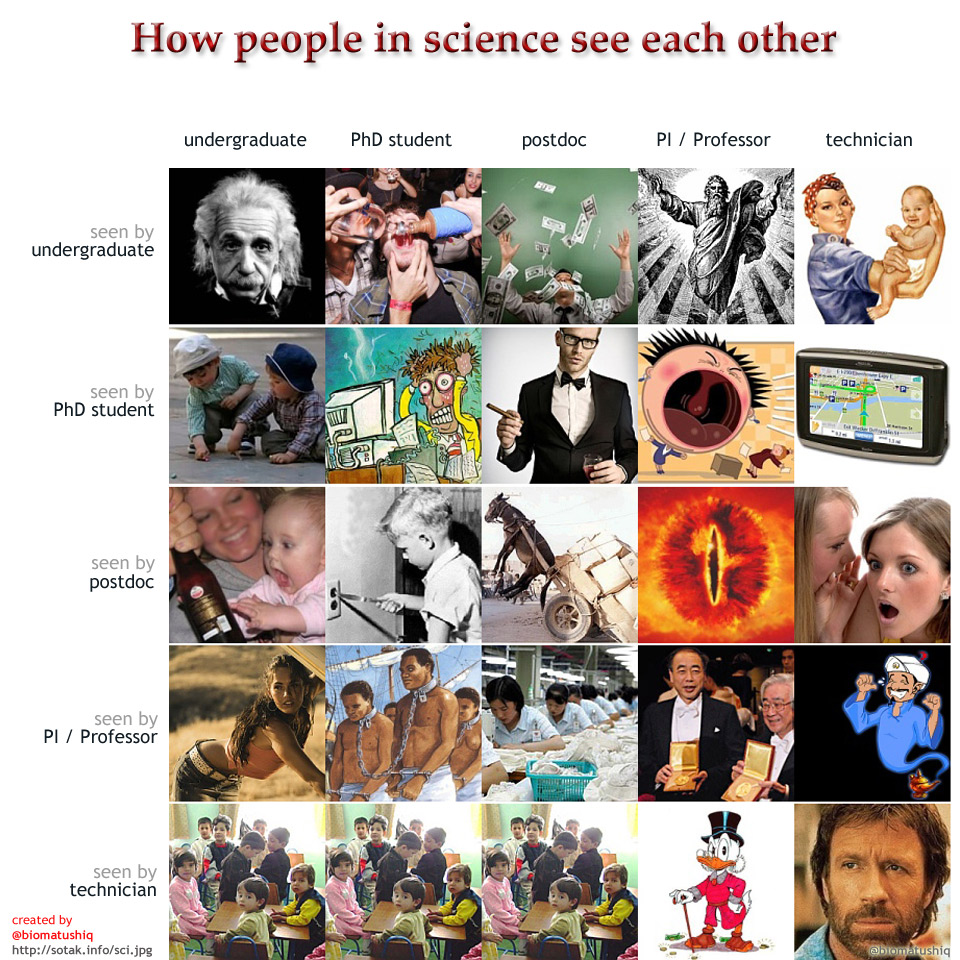
[2] I sometimes feel that it is probably much harder for accounts people to deal with faculty members than for us to deal with them.  If they are not dealing with people like me who dare to organize big events without knowing the basics of writing up a budget, they are dealing with others who try to teach them how to do their jobs! Abi@nanopolitan, in this post has a link to a really nice picture about how people in science see each other.  One could easily replace the technician with the accounts section staff.