Showing posts with label Department activities. Show all posts

Sunday, February 18, 2024

The week in "review"

In the last few posts, I have been sharing thoughts around academic reviews: is research productivity the only criterion that matters to a reviewer? Does time spent in mentoring or teaching beyond our institutional duties matter? Is it judged negatively? What does a review process (and preparing for it in any form) do for us (point (3) in this post)?

One of the reasons why this has been predominantly in my thoughts is because our department was preparing for an external review that happened in the past week. A group of six senior mathematicians visited us for a few days, and met us all individually as well as in a group in order to review how we were doing as a department. For the individual meetings, we were all encouraged to prepare a report on our academic activities in the last five years, and a presentation on our recent and future research goals. The emphasis of the presentation was to be solely on our research work. This was a serious exercise, and we spent hours figuring out how to explain our research work to the committee (which would not necessarily have specialists in our field) in a comprehensible manner in under 10 minutes. With the adrenaline rush of students preparing for their exams, we worked to prepare the slides. Over short coffee breaks, we discussed this with friends and made philosophical remarks about what this was doing to us [1]. 

My individual meeting with the committee was pleasant beyond my expectations. After hearing out the presentation and a brief discussion on research work, the committee asked me a question which I was not quite prepared for: "Are you happy?" When was the last time someone asked me this question in my adult life, I wondered [2]. I had an affirmative answer to this question (and truthfully so), and we went on to have a friendly conversation about related issues such as teaching and student supervision. 

One other amazing thing about this meeting was that two of the members had informally mentored me before I moved to North America for graduate studies. Neither of them had taught me directly, and while one of them was a faculty member in a department where I studied for a few months, I met the other one in a summer school organized by them. Looking back to that time, I don't believe I showed any unusual talent or ability. I just had a strong interest in pursuing mathematics, and needed to know how to continue doing it: both these members gave me the gift of their time, attention and advice when these were needed the most. It is likely that members of the committee had had a similar interaction with some of my other colleagues. An important take-away from this meeting, therefore, was that my fear about being judged negatively for spending time on mentoring or outreach activities beyond research and teaching at IISER was unfounded because it was clearly something that these members also care for [3]. 

Later in the week, the committee met us all as a department and we had a lively exchange of ideas about our larger goals and challenges. The committee members also talked frankly about facing similar challenges at earlier stages of their careers, and once again, one could not help but appreciate their gift of time and attention to all of us.

While this review process undoubtedly turned out to be a great experience, not all reviews have such positive outcomes. Occasionally, feedback or suggestions received in a review process of any kind, be it from an article referee, grant agency, audience at a seminar or even PhD advisor/mentor may not align with how we think and work. Sometimes, we may not receive timely, or well considered feedback at all. Recently, I listened to an episode of the podcast Pratidhvani, in which the guest, Professor Suresh Govindarajan described a challenging situation during his PhD days, when his advisor chose not to give him timely feedback on his work. In addition, the advisor made a suggestion that did not align with the student's value system.

PhD studentship is one of the most vulnerable phases of life; the final phases of PhD, when your research needs full, one-pointed attention, is also the phase when you have to worry in real time about where you will go next. The role of the advisor, particularly in terms of providing meaningful and regular feedback on your work, in order for you to finish the degree and move on to the next stage of your training, is extremely important here. What if the advisor chooses not to provide such feedback, or to provide it in a manner that is not helpful at all? How Prof. Govindarajan coped with the situation is best heard in his own words (56.43 onwards on the podcast is when this particular situation is described).

This is what I am going to take away from the above episode and from all the reviews I have been through: feedback received in a review is temporary, based on what a particular reviewer (with their own expertise and perspective) is evaluating in a given situation at a given point of time. We should receive it in that spirit. It is not a " permanent indictment" on our whole state of being. Our own performance keeps changing and evolving based on the resources available to us, and the environment we are in. For example, someone who is seen to be struggling while at one department can blossom into their full potential in another department with a more supportive work-place, or where they have people to talk to and collaborate with, or where they simply feel happy. It is difficult to see a review as something temporary, especially if it is negative: human nature is wired to hold on to criticism, and overcoming this tendency feels like a task of Yogic proportions. 

In the context of academia (as perhaps also in the context of a vocation based on the creative arts), a safe coping mechanism to handle reviews of all kinds (good, bad, non existent) is the way of authenticity. What our work means to us and how we want to do it can only be determined by us; it has to be anchored in our own sense of self, our own honest self-evaluation of our work, and our own innate desire to grow. With this in place, an external review, if provided constructively, can bring more clarity in how we can do our work better. It can be a means of encouragement and even inspiration. If the review provided is not constructive, but well-meaning, it may not be as effective, but certainly deserves a sense of gratitude for the reviewer who spent time and energy trying to provide one. 

Handling malicious or unethical reviews is a test of resilience. Here, I am referring to situations where the review cannot be ignored, comes from a party that wields a position of power over you and is not immune to misusing that power to your detriment. I still don't know how I would handle such a situation. Maybe, I won't know until I find myself in one. May we all have the strength, the gumption [4], the resources and the support to handle such a challenge without giving up on ourselves, our values and on what we love. 


[1] For starters, it brought out (or reminded us of) the exuberant, childlike enthusiasm that brought us to mathematics in the first place.

[2] In my own case, by adult life, I mean life after starting an independent faculty position. 

[3] One of these days, I should do a focused, self-therapy session to figure out where this "fear" has come from.

[4] Gumption, not defensiveness.

Saturday, October 29, 2011

The real job

My last couple of posts have been about administrative responsibilities at N1 and how they leave me with mixed feelings.  Although I may occasionally complain about how these responsibilities take away from my "real" jobs of teaching/research, the truth is that these activities give me a strong sense of belonging and contributing to N1.  They make me feel that N1 is my own institute.
In other words, serving the institute is also a "real" job and an integral part of my professional life.  

So, recently I did a careful and candid rethink about why I have been getting so stressed out about activities which I consider fun and important.  I came up with the following reasons:

1) Lack of clear demarcation between admin work time and research time.  In theory, I spend the mornings doing research work/teaching and take up administrative work after lunch.  But, my habit of frequently checking emails as soon as I step into office distracts my focus because I feel the urge to reply to emails which can wait till afternoon.  Some self discipline and prioritization is therefore required.  I notice that on the days when my mornings are spent productively, I am also able to focus well during committee meetings and even enjoy them.

2) Although our administration is very supportive, certain matters do take time to be resolved, especially those related to the student complaints I routinely receive.
When a student brings up a problem and I am not able to resolve it immediately, I myself feel helpless and impatient.  Perhaps, this is is the reason why I get more annoyed when students accost me repeatedly about that issue.  This attitude is self-defeating.  I believe that the right thing to do is to pro-actively forward the complaints to those who have the authority to address them and also to keep reminding them till they look into it, but to be inwardly detached, as it were!

3) There's too much on my plate.  I certainly don't want to shy away from serving the institute in any way possible.  But, while it's great to be enthusiastic about institute matters, it is equally important to understand one's abilities and limitations and take up only as much work as one can perform properly (of course, this capacity increases with time).  It is also important to focus on one duty at a time.
The other day, I was in an important meeting, but had to keep coming out of the room to take phone calls about another administrative matter.  Because of this, I missed some key points that were discussed in the meeting about which I had a lot to say.

I welcome feedback from readers about how they balance their time between research, teaching and admin work.  If you faced issues similar to those above or other issues which might have affected your efficiency, especially at the early career stage, please share your stories and tell us how you resolved them.

Meanwhile,  I would like to conclude this post by a very thoughtful comment that Vijay left on my previous post and which has lots of useful advice about one's involvement with administration:

 I emphasize with your time management jugglery. It can be tough. There are many good ways to manage in a way that we still end up having time for science. Some shun all administration and isolate themselves. They need to be protected, not envied or deprecated by others who put in their effort in science administration (which is important if the place is to be ours). How do we, in the latter category deal with our day? My personal take ( and as I said, there are many ways to skin this fish) is that much of the stress we face at meetings is because we feel its something that detracts from our main interests... Being stressed about being in meetings makes us less efficient at meetings, resulting in more meetings and more stress. Going prepared with clear goals and getting out of a meeting and then switching off is much better: Easier said than done, and I wish I followed my advice. As with meetings, so with students and colleagues. If you are visible and accessible, assume you are fair game for being accosted for a discussion. When in such a discussion, its better to be involved than feel that your time is being taken. Much of our bonding and the culture of an institution come from such interactions. When you want to be left alone, hide. Others should sense when you have to be left alone, of course, but in general I prefer to be accessible in error rather than people keeping away in excessive caution.

Saturday, August 27, 2011

Winter school - conclusion

Our winter school was very successful.  Dr Rock-Star, the primary speaker, was absolutely delighted to see a large number of enthusiastic students for his lectures.
The topic on which he was lecturing is a very important topic in my field, and the available literature on this subject follows a certain approach.  However, he chose to convey the subject matter using a very different approach, which is elegant and more easily comprehensible to students.  He had not previously communicated much to me about his lectures and I realized on the first day that the problem sets that had been previously prepared (following the traditional approach) for tutorials would not match his lectures.  So, every morning before his lectures, Dr R-S and I would sit together and prepare new problem sets.  I have to admit- he was the brain behind the problems while I mostly typed them out and solved them.  I think I enjoyed this part of the winter school the most.  This new approach to the topic has also generated some interesting research problems and has been a valuable addition to my research programme.
The tutors played a very important role in the whole school.  They have not had any previous experience in teaching and took on this responsibility with a very positive attitude.  The material presented in the lectures was also very new to them.  They would take the problem sets from me just after Dr R-S's lecture everyday, work on them during the lunch hour and tutor the students in the afternoon.  According to the feedback forms that we later received,  the students highly appreciated the effort put in by these tutors.  I wish them a successful academic career ahead!
Our participants, as I mentioned before, were a healthy mix of students from IIX institutes as well as colleges and universities.  From the feedback received from them, it seems that most IIX students saw this winter school as yet another opportunity to do something exciting in the winter vacation.  Many of them applied to it because they were encouraged by the faculty at their institutes who were aware of Dr R-S's contribution to this field.  On the other hand, most of our university student participants had not heard of Dr R-S before and their primary motivation in applying was simply to experience the scientific atmosphere at a research institute.  The students unanimously felt that they got much more out of the lectures than they had anticipated.  This is possibly because instead of just attending lectures, they worked out the material in the lectures by themselves in the tutorials.  Another interesting feedback we received was that university students found faculty at N1 much more friendly and easy-going than those at their universities.  They probably would have had the same impression at most IIX and research institutes.
Dr R-S's visit and the winter school has been a great boost to our baby department.
Many students from N1, who attended these lectures, have now decided to major in my STEM field.  Even those students who have not done so have benefited from these lectures and have now become regular visitors to our department seminar.
Dr R-S enjoyed the visit very much and will be visiting us again in the coming winter.
Last, but not the least, my colleague from the last post, has now overcome his health problems.  Although his primary research interests are different from mine or Dr R-S's, he attended the lectures and enjoyed them.  He is very excited about the positive impact of such visits to N1 by senior scientists and we are both planning more workshops/winter schools in the coming years with external funding.  I hope that more colleagues will catch on to the spirit and join our efforts to make our department at N1 active and vibrant.


Sunday, August 21, 2011

Mission winter school

Before continuing with the winter school story from my last post, I quickly went over it.  The frequent use of the pronoun "I" instead of "we" irked me and possibly irked the other readers as well.  Let me clarify - I am not a megalomaniac.  Nor do I lack in team spirit.  There were three of us who initially planned the lecture series.
However, by the time the plan was put into motion, one of my colleagues was battling a serious health problem while the other colleague was dealing with some personal issues which significantly engaged the colleague's mind and energy.
Moreover, since Dr Rock Star has been my academic mentor, it meant a lot to me that his visit should be a success and that he should return with a good impression of N1.  So, I ended up planning the event myself (although with a lot of help from the admin staff).  Hence the use of "I" more than "we".
Nonetheless, I do acknowledge that I have a serious problem in asking for help.  I tend to take on more responsibilities than can be handled comfortably[1].  Recently, I made some serious mistakes because of this tendency to bite off more than I can chew and have learnt, since then, to ask my colleagues frankly for help and also to say no to something I am unable to do(though I must admit, I say it rather tactlessly and sometimes to the wrong people, but more about that later).
Coming back to the topic at hand, the whole event was shaping up very differently from what had been initially anticipated.  Ideally, workshops/instructional schools should be planned and announced at least 4 to 5 months before the event so that by the time the participants are invited, they have enough time to book their tickets.
However, in this case, the announcement was sent out only about two months before and it was exactly a month before the event week that the "selected" participant list was ready [2].  At this time, a tragedy occurred - due to an unexpected server problem, some of us lost all the emails in our N1 email account.
I was among these unfortunate few [3].  Not being a very computer savvy person, I had not created a back-up and therefore, lost all the contact information of the selected participants [4](their email addresses had been clubbed together in my address book, which I also lost).  However, since I was "personally invested" in this mission and 25 is not such a big number, I remembered the names of all the participants and which institutes/universities they were from.  It was easy to retrieve the email addresses of students coming from research and IIX institutes.  Not so for university students.  Fortunately, I remembered the writers of their reference letters and it was easy to contact them and ask them to send me the email addresses of these students.  So, this crisis was somehow averted and important lessons were learnt regarding data management as falling back on memory is not always a viable option.
All invited students, except one, confirmed their attendance.  Around this time, I announced Dr R-S's visit to students at N1 again and about 25 students expressed an interest in attending these lectures.  So, we now had a nice audience of about 50 students ready for the lectures, with four of them being PhD students, willing and able to run tutorials.  So, it seemed more appropriate (and also more fashionable) to call this a winter school.  The budget was approved, all required rooms in guest house and hostels were reserved, the registration packages for participants were ready and a bus was arranged to bring students from the train station at scheduled hours.  A big lecture hall was also booked.
Around a week before the arrival of the speaker, I started receiving emails from more students at N1, who wanted to attend the winter school.  Since the lecture hall can accommodate a very big number of students, there was no problem in them attending the lectures.  However, it was too late to register them for the winter school and therefore, we could not give them the registration package (which included meal coupons).
In the 48 hours preceding the first day of our winter school, a few strange and unexpected things happened.  An undergraduate student from an IIX institute, who had not applied before, wrote to me out of the blue that he would be attending the event and that he had already booked his train tickets for N1 city.  I was highly irritated, but could not do much because by the time I received the email, he would have already boarded the train to N1 city.  I did not have the heart to refuse him hostel accommodation on his arrival, but I did have a talk with him about winter school application etiquette.   I would like to hear back from readers what they would have done in such a situation.
I also got a panic call from four female students coming from a college in Delhi.
These students had made their booking together through a travel agent, who booked their train for a wrong date.  They realized this only on reaching the station and by then, it was too late for them to book another train.  So, they had no option available except to come by flight the next morning.  This was not such a big problem for me - the shuttle bus driver was instructed not to wait for them at the train station and pick up arrangements were made from the airport.  However, on the day of their flight, they called up again to inform me that this flight had got canceled and that the only flight available was a late night flight.  Due to a shortage of institute vehicles, at such short notice, I had no option but to hire a vehicle(Tata Sumo) from a private operator known to me. The father of one of the women spoke to me and said that he had apprehensions about the girls arriving at N1 city at such a late hour and being received by a private taxi driver.  I sympathized with his concerns, but was at my wits end.  At that time, I remembered that most students at N1 are usually up till very late at night.  I called up two second year students, who had volunteered to help me with organizing the event, and asked them if they could accompany the Sumo driver and receive the girls.  These two boys, of course, jumped at the opportunity.  The father was now sufficiently reassured.  Needless to say, the girls arrived very late, but safely and comfortably at N1.
All students had now arrived on campus and we were ready to begin.
Okay, so the post has again turned out to be much bigger than I thought.  What's more, I am visiting my family this weekend and my disciplinarian father is mortified that I am blogging so late at night.  I will continue the story in my next post.


[1] As a child, I once asked my teacher to make me a class "monitor".  But, once she did so, I found myself unable to do even simple things like opening a Godrej almirah, in which we stored our books etc. 
[2] Some students, who could have really benefited from these lectures, applied after the deadline.  Sadly, I was unable to invite these students because we had already reached the numbers approved by the administration.
[3] All our lost data was indeed retrieved later, but by then the winter school was over.
[4] I had put together all their email addresses in my address book the previous evening, with the intention to send out the invitation the following morning. The server problem happened overnight.  In my (misplaced and ill-timed) effort to save paper, I also did not print out the applications of students, but kept track of them online. 

Monday, August 15, 2011

How an informal lecture series became a winter school

Happy independence day to all Indian readers!
Today, I would like to write about an activity at N1 last year that I thoroughly enjoyed organizing.
After I joined, some colleagues and I felt that it would be a good idea to invite a distinguished scientist in our field to visit us for a week in the winter and deliver some lectures that would be accessible to students.  This was a vague idea, but no one had any concrete suggestions.  Apart from the above qualities, we needed a speaker who would be willing to spend a week at a new institute like N1 at a time when almost all institutes in India organize their conferences/workshops etc.
One of my academic mentors, let's call him Dr Rock Star, maintains very close ties with India and frequently visits different research institutes here.  He has done some really good work in my field and also happens to be an excellent teacher.  He was one of the people who offered me a lot of encouragement when I decided to join N1 and had even expressed a willingness to visit me some time.  So, he seemed to to be the "ideal" candidate for our mini- lecture series.  Our director immediately approved the lecture series.  I wrote to Dr Rock Star, who happily accepted our invitation.  However, as his schedule is usually very packed, we did not have a lot of flexibility in coming up with dates.  He simply gave us a block of five days in which he was not scheduled for any other event and we had to plan our lecture series within those days.
The immediate challenge was that the last three of those five days were coinciding with an international conference at N1 that had been planned months in advance.  I also came to know that there was another symposium coinciding with the first two days of our proposed lecture series.  This symposium had been announced before I joined N1 and I was not made aware of it until after Dr Rock Star confirmed his dates.  Given the space and resource constraints at N1, I found myself in an uncomfortable situation.  I felt that I was trying to bull-doze my way through events which had been carefully planned months in advance.
Fortunately, the organizers of both the conference as well as the symposium had no such qualms and fully co-operated with me. We sat together and figured out the room allocations for all visitors of the three events and luckily, our guest house had just the right number of rooms available to house all faculty participants of the three events as per their dates.
The second challenge (or so I thought) was to get student participants for our lecture series.  At first, my plan was to have the lectures only for students at N1.
Sadly, students from my own department were very few in number and did not show much enthusiasm for Dr Rock Star's lectures.  I was scared that he might just end up lecturing to empty class rooms!
I remember bringing up this issue during a departmental meeting, in which the director was also present. I asked him if I could invite about 20 students from outside N1 to attend the event.  He approved this suggestion along with the reimbursement of travel expenses of out-station participants and asked me to get in touch with the accounts section to work out the detailed budget.
That evening, I sent out emails to my colleagues at other institutes in India, announcing Dr R-S's visit and lectures and requested them to forward this information to students from their institutes and universities in their cities/towns who would be interested in these lectures.  I thought that within a few weeks, I might hear from around 20 students who would like to attend these lectures.  I was in for a big surprise! By the next afternoon, I had received about a hundred emails from interested students.  To my amusement, some of the emails were from lecturers in certain colleges who wanted to bring their whole class along for these lectures.[1]
Over the week, I received many more applications.  It was clear that I would have to follow some sort of selection procedure to short-list  genuine participants.   So, I wrote back to all these students asking them to submit, by a certain date, a statement of interest explaining why they were interested in these lectures along with a reference letter from someone who could comment on their academic performance.  This automatically narrowed down the applicant pool.
Apparently, college lecturers who previously wanted to bring their whole class with them did not show any willingness in guiding their students on how to write a statement!
By the deadline, I received about 30 "complete" applications from students from various universities and IIX institutes.  These were mostly undergraduate students, but some of them were in Master's programs.  Some of these applications had to be rejected because these students, applying from the same department, had just cut-copy-pasted the same statement!  Other than these, I invited all other students.
They were about 25 in number, including 4 PhD students.
Meanwhile, I announced Dr R-S's visit again to our students at N1.  This time around, I received a much more positive response.  25 students expressed interest in attending these lectures.  Apparently, when I had sent the previous announcement, many of them had not received it due to a server problem and hence the poor response!
So, there would be 50 student participants attending these lectures.  It was much more appropriate to call it a winter school now.  The 4 PhD students were asked if they would be willing to run tutorial sessions after lectures on each day of the school- they agreed.
At around this time, I went to the accounts office.  After all the horror stories I had heard about accounts sections in government institutes, I was very nervous about dealing with them.  But, they turned out to be  very helpful and friendly.  I had no experience in preparing any kind of budget before and had no idea how to contact caterers, transport providers etc- the accounts office did all this work.  They also pointed out how much expense one would incur on many other contingencies that I had not thought about. [2] One evening, after some discussion, around 5 pm,  our budget was ready. We sent it to the director and by 6 pm, we got a one-word reply from him, "approved".

This has turned out to be a much larger post than I imagined (just like the winter school).  In my next post, I will write about my experience in running the winter school, which is when the real challenges showed up.


[1] The other amusing outcome was that Dr Rock Star started receiving invitations from several colleges in India, from which he had never heard before, inviting him to visit them during his forthcoming visit to India!
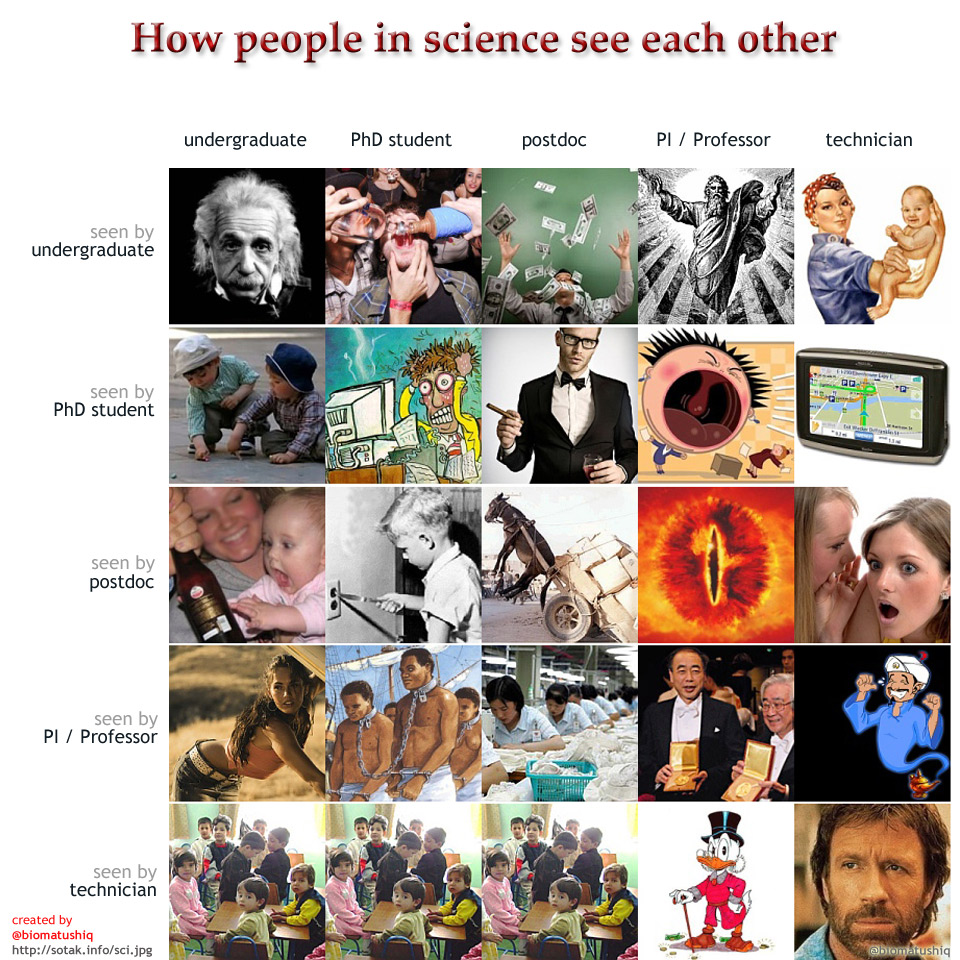
[2] I sometimes feel that it is probably much harder for accounts people to deal with faculty members than for us to deal with them.  If they are not dealing with people like me who dare to organize big events without knowing the basics of writing up a budget, they are dealing with others who try to teach them how to do their jobs! Abi@nanopolitan, in this post has a link to a really nice picture about how people in science see each other.  One could easily replace the technician with the accounts section staff.